
What it is
GS1 Digital Link is a published specification from GS1, the global standards body that allocates GTINs and maintains the barcoding rules retail uses today. The official GS1 Digital Link specification is published at gs1.org/standards/gs1-digital-link. The specification defines a way to take any GS1 identifier (most commonly the GTIN, but also batch, serial, expiry, and others) and encode it inside a web URL.
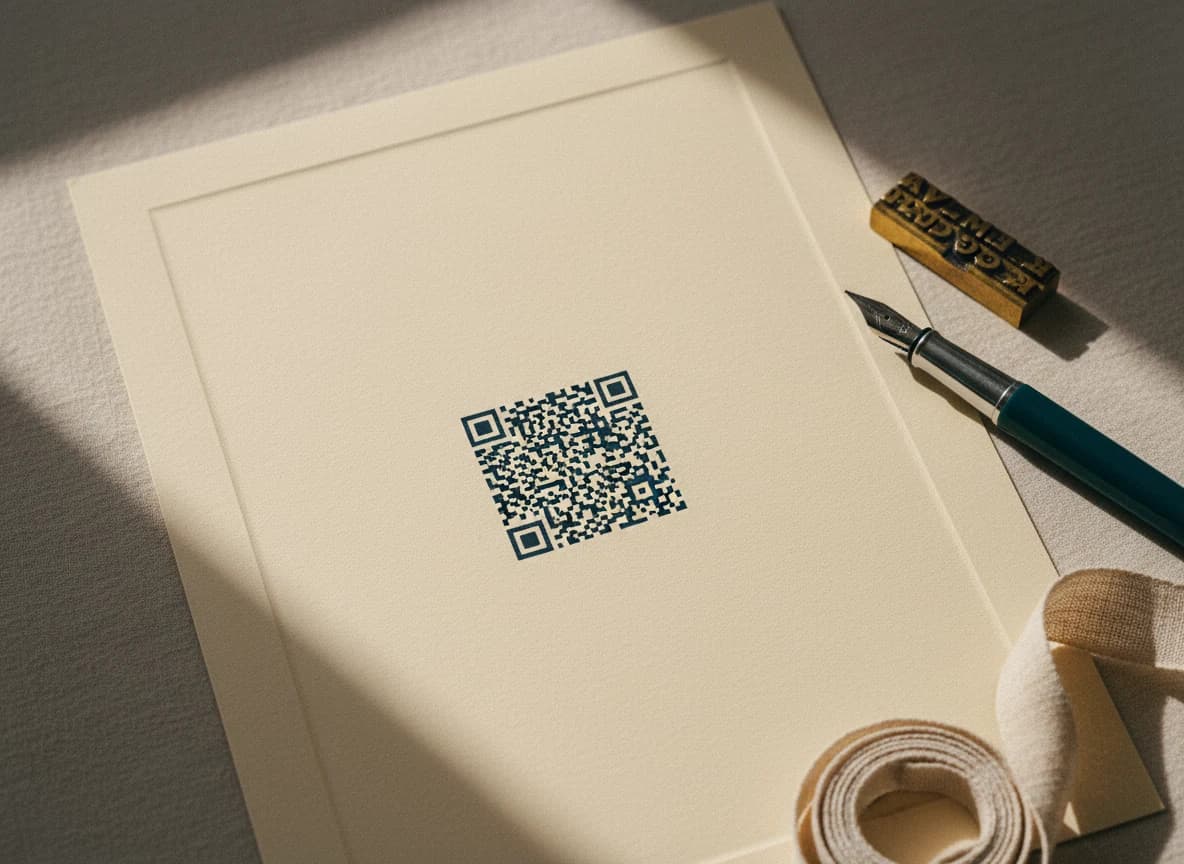
The URL is the thing your QR code carries. When a 2D-capable retail scanner reads that QR at the till, it extracts the GTIN. When a shopper's phone reads the same QR, the phone opens the URL in a browser and lands on your structured product page. One barcode does both jobs.
Before Digital Link, retail and consumer flows used different codes. After Digital Link, the same code answers both.
URL syntax
The basic shape of a Digital Link URL is:
https://<domain>/01/{gtin}The /01/ path is the GS1 Application Identifier for the GTIN. You can attach more identifiers as additional path segments:
https://<domain>/01/{gtin}/10/{batch}/21/{serial}
Where /10/ is the batch number AI and /21/ is the serial number AI. You can also attach query parameters for non-identifying context, but the path-style is the canonical form.
- The host can be any HTTPS-served domain you control or a platform-hosted domain.
- The GTIN must include a valid mod-10 check digit.
- Batch and serial qualifiers are optional and only included when batch-aware behavior is needed.
- The URL is human readable, which means it survives manual inspection and URL-only scenarios.
Examples
Here is what a real Digital Link URL looks like for a few common scenarios. Each one is a valid encoding the platform produces for you when you publish a product.
https://2dbarcodehub.com/01/09312345678907
https://2dbarcodehub.com/01/09312345678907/10/LOT2611A
https://2dbarcodehub.com/01/09312345678907/21/0000142
When the platform's resolver sees these URLs, it routes the request to the right product page, optionally enriches it with batch-aware data (best-before, origin, manufacturing date) and serves the public passport.
Versus the old EAN-13
The old EAN-13 is a 1D barcode containing only a 13-digit GTIN. It identifies the product. That is the entire scope.
GS1 Digital Link extends that idea. The GTIN is still in there, but it sits inside a URL that can be opened by a phone. The same code now identifies the product at the till AND points the consumer at a passport. Most brands run both side by side during a transition window.
Retailer adoption
The industry-wide Sunrise 2027 goal is for retail point-of-sale to be able to read 2D barcodes carrying GS1 Digital Link URLs by the end of 2027. Many of the largest grocery chains globally are on track. Drug, beauty and CPG categories follow.
Brands typically dual-mark their packaging through the transition window: a 1D EAN-13 in one corner, a 2D Digital Link QR in another, until their largest retail partners confirm full 2D support. The platform's QR exports are designed to work on the same artwork as your existing 1D barcode.
Read the Sunrise 2027 migration planHow to start
The fastest way to see Digital Link in action is the free generator. It validates your GTIN, builds the URL, and exports a real QR you can drop into a packaging mockup. Once you have a workspace, the same code resolves to a real public passport you control.