
A connected pack should not feel like a gimmick. When someone scans your 2D barcode, they should get useful product information first, then a clear optional next step: join a giveaway, leave feedback, check recycling, find a retailer or read a story about the product they are holding.
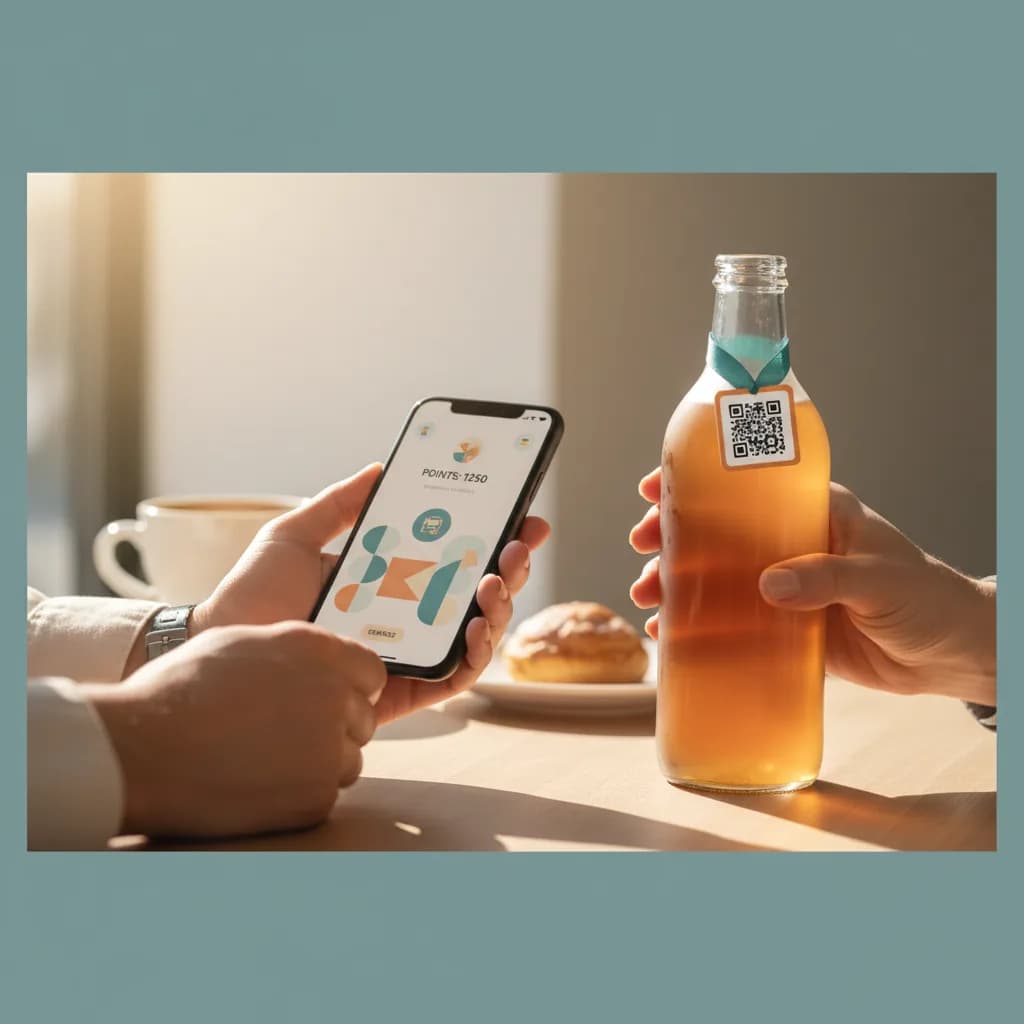
The same GS1 Digital Link QR can support education, loyalty, retail activation and safety without changing printed packaging.
Run a prize draw, collect opt-in details with consent and keep the main product passport visible for everyone who scans.
Invite repeat buyers into a loyalty or VIP list without needing a separate QR code on the same pack.
Ask a short product-specific question after scan: flavour rating, packaging feedback, purchase location or recall communication preference.
Show sourcing, sustainability, recycling and social-impact content in context, next to the product information consumers already came for.
Many QR campaigns fail because the scan destination is a disconnected promotion page. The shopper scans a pack of sauce, coffee, supplements or skincare and lands on a generic campaign microsite that could belong to any product. That approach can collect entries, but it does not build product trust. A better connected packaging flow starts with the product passport: product identity, ingredients, allergens, nutrition, certifications, recycling, traceability and brand story. The campaign sits on top as an optional action.
This matters because the same code is printed on the physical pack. The brand cannot easily change it after production. The scan experience needs to remain useful after a promotion ends, after a retailer activation changes, and after the first campaign window has passed. A GS1 Digital Link product page gives the pack a permanent home. Scan Actions, resolver links and campaign content can change around that home without breaking the QR code.
The product page should carry information that belongs to the product itself: GTIN, product name, images, ingredients, allergen statement, nutrition, recycling notes, certifications, origin story, safety notices and traceability data. The engagement layer should carry time-based or optional interactions: enter a competition, leave feedback, join loyalty, claim a retailer offer, watch a product video, find where to buy or read an impact story. Keeping those layers separate makes the system easier for brands to manage and safer for consumers.
Inside 2D Barcode Hub, this is handled with product records, scan actions and resolver links. A product can have a public mobile page. A scan action can be live, scheduled or ended. Resolver links can point to product information, sustainability, recycling, certificates, batch lookup, where to buy, or a recall and safety notice. Brands can choose which link matters most without needing a new QR code every time.
We deliberately avoid positioning this as generic campaign software. CPG teams already have email tools, CRM platforms, social ads, retailer media and promotion agencies. The unique value here is the product scan moment. A consumer is holding the product. They have context. They may want trust, proof, help, recycling guidance, a repeat purchase path or a reason to share feedback. The platform should make that moment clean, useful and measurable, not noisy.
That is why the best engagement workflows are practical: "where can I buy this again?", "is this recyclable where I live?", "what batch is this?", "is there a recall?", "can I get a discount on the next pack?", "can I tell the brand what I thought?". Those questions are closer to connected packaging than a generic marketing landing page.
Consumer engagement must be built with consent. The scan page can be viewed without giving personal details. If a brand asks for email, phone, name or feedback, the form should explain what the consumer is joining and require a privacy acknowledgement. Analytics should measure scans, devices, countries and cities without turning the product page into a third-party tracking trap. The platform uses hashed-IP analytics and keeps lead capture separate from the public product information.
Start with five active product pages on the free plan, then add scan actions when your brand is ready to test engagement.